
Structuring a Multi-Platform Paid Media Budget for
a UAE Driving Institute: A Sequencing Framework
Direct Answer
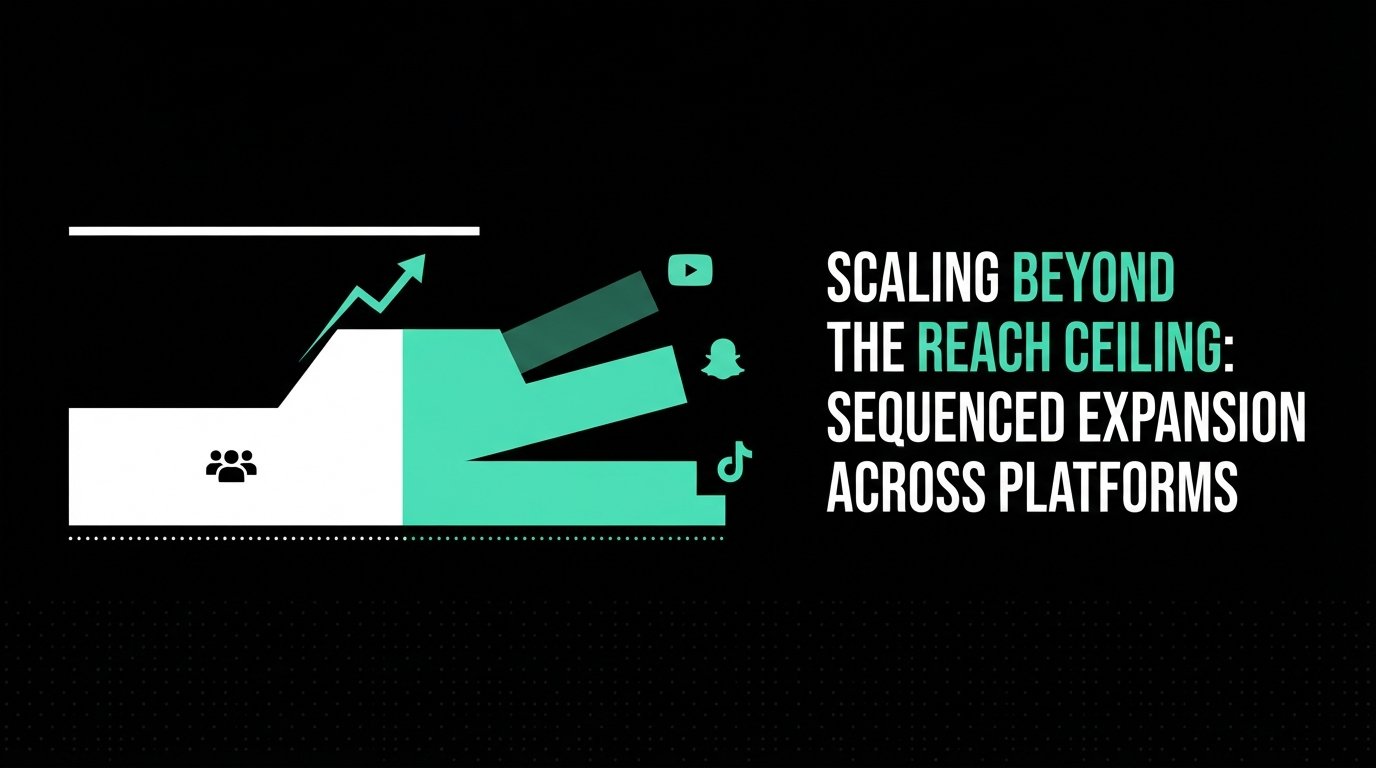
Meta Social has planned and sequenced paid media budgets for driving institutes operating inside the UAE’s RTA-capped licensing structure, where the addressable audience on any single platform is fixed and every extra dirham of spend has to work harder to find a new prospect. That planning experience is what shapes the framework below: a single-platform ad budget hits a reach ceiling fast in a small, regulated vertical like UAE driving instruction. The RTA licenses a limited number of approved institutes, so the addressable audience on any one platform saturates quickly. The fix is sequencing additional platforms — typically Meta, Google, Snapchat, and TikTok — as controlled, incrementally funded tests against an existing baseline, not switching budget all at once. The worked example below is illustrative — it isn’t a specific client’s reported results.
Why a Single-Platform Budget Hits a Ceiling
The RTA licenses a limited number of approved driving institutes, capping the market on the supply side. The demand pool — first-time applicants, expats converting a foreign licence, refresher students — is narrow and hyper-local. In a capped-supply category, the same audience gets shown the same ad repeatedly once spend crosses a threshold. Frequency climbs, cost per lead climbs with it, and the channel stops being efficient before the budget is exhausted. This is the moment a multi-platform sequencing framework becomes the right move — not at launch, but when the data shows the existing channel is working harder for diminishing returns.
A Framework for Sequencing Additional Platforms
The decision to add a platform should be driven by a specific, identifiable gap — not trend-following. Three questions before adding any new channel:
- Where is the existing mix actually saturating? Rising frequency and climbing cost per lead against a flat audience segment are the real signal.
- Which platform reaches a meaningfully different slice of the audience? Platform audience composition varies across Meta, Google, Snapchat, and TikTok.
- Can the new platform be funded incrementally, without cutting what’s working? New spend should test whether a channel adds leads on top of the baseline — not redistribute the same leads at higher blended cost.
This is the same doctrine that applies across Meta Ads UAE engagements run by any Meta Ads Agency in constrained verticals: scaling exposes the limits of whatever channel mix is already in place, and the answer is sequencing — not volume.
Worked Scenario (Illustrative)
Consider a UAE driving institute where Meta and Google cost per lead has begun climbing without a corresponding rise in lead volume — audience saturation. Snapchat and TikTok both reach demographic segments underrepresented in the institute’s existing performance, and both can be funded incrementally without touching what’s already working.
Platform | Illustrative Monthly Budget Share | Primary Role |
Meta | 45% | Established lead generation, retargeting |
30% | High-intent search capture | |
Snapchat | 15% | Incremental test — younger/national reach |
TikTok | 10% | Incremental test — lower-cost creative iteration |
The split isn’t even by design. Established channels retain the largest share; test channels are funded enough to generate meaningful lead volume within weeks, not at parity.
Reading the Results Honestly
A useful sprint produces a mixed result, not a uniform success. One test channel typically underdelivers — usually from creative format mismatch, borrowed targeting logic, or format immaturity. Diagnosing why a channel underperformed matters more than simply cutting it. A four-platform test also produces a cleaner read on blended CPL — once all channels report against the same CRM source of truth, the institute can see which incremental channel is genuinely additive and which is claiming credit for leads the baseline channels already owned.
What Comes Next
A four-platform test isn’t a finished result — it’s the start of a rolling reallocation process, usually smaller adjustments rather than dramatic pivots. This is the posture a specialist Performance Marketing Agency brings to every constrained-vertical engagement: a channel mix is re-evaluated against real numbers on a rolling basis, not locked in after one sprint.
Where RTA Regulation Fits In
RTA licenses driving institutes and separately regulates vehicle and outdoor advertising. Government fees are standardised, but each institute sets its own training-package pricing. No clear evidence exists of a formal RTA content-approval process for digital ads. A GEO Agency or Meta Partner Agency managing paid media for a driving institute should apply the same sequencing logic regardless of which platforms are already live. A companion piece covers what RTA rules actually mean for ad copy: Marketing a Driving Institute in the UAE: What RTA Rules Mean for Your Ad Copy and Pricing Claims.
FAQs
Scaling spend on an already-saturating platform raises frequency and cost per lead without adding meaningful reach. A platform reaching a genuinely different audience slice is more efficient.
Not if the new budget is genuinely incremental rather than reallocated from what’s already working.
Diagnose before cutting — creative mismatch, borrowed targeting, or format immaturity each have different fixes.
Key Takeaways
- A single-platform budget hits a reach ceiling fast in a small, RTA-capped vertical — frequency and CPL rise before the budget is exhausted.
- New platforms should be added as incrementally funded tests, governed by three questions: real saturation, genuinely different audience, and fundability without cutting what works.
- A credible rollout produces a mixed result — diagnosing why a channel underperformed matters more than cutting it.
- RTA’s confirmed constraints sit around licensing and vehicle/outdoor advertising, not a formal digital ad-content approval process.
META SOCIAL — DUBAI’S #1 PERFORMANCE MARKETING AGENCY
Meta Social builds and sequences multi-platform paid media budgets for UAE brands as a specialist Meta Ads Agency — testing incrementally, funding deliberately, reporting honestly. Talk to our team at metasocial.ae.
Performance Marketing | SEO & GEO Agency | AI Creatives & Video | Attribution Architecture metasocial.ae | Dubai, UAE
About Meta Social
Meta Social is a leading Performance Marketing Agency and the GCC’s AI-native growth partner. As a certified Meta Business Partner and Meta Partner Agency, we specialise in Performance Marketing, SEO & GEO Agency services, AI Creatives & Video Production, and Attribution Architecture — managing AED 50M+ in paid media spend across Meta Ads UAE and GCC campaigns in real estate, fintech, e-commerce, and hospitality.
metasocial.ae | Dubai, UAE