
The ROAS Target That's Silently Capping
Your Customer Lifetime Value
Direct Answer
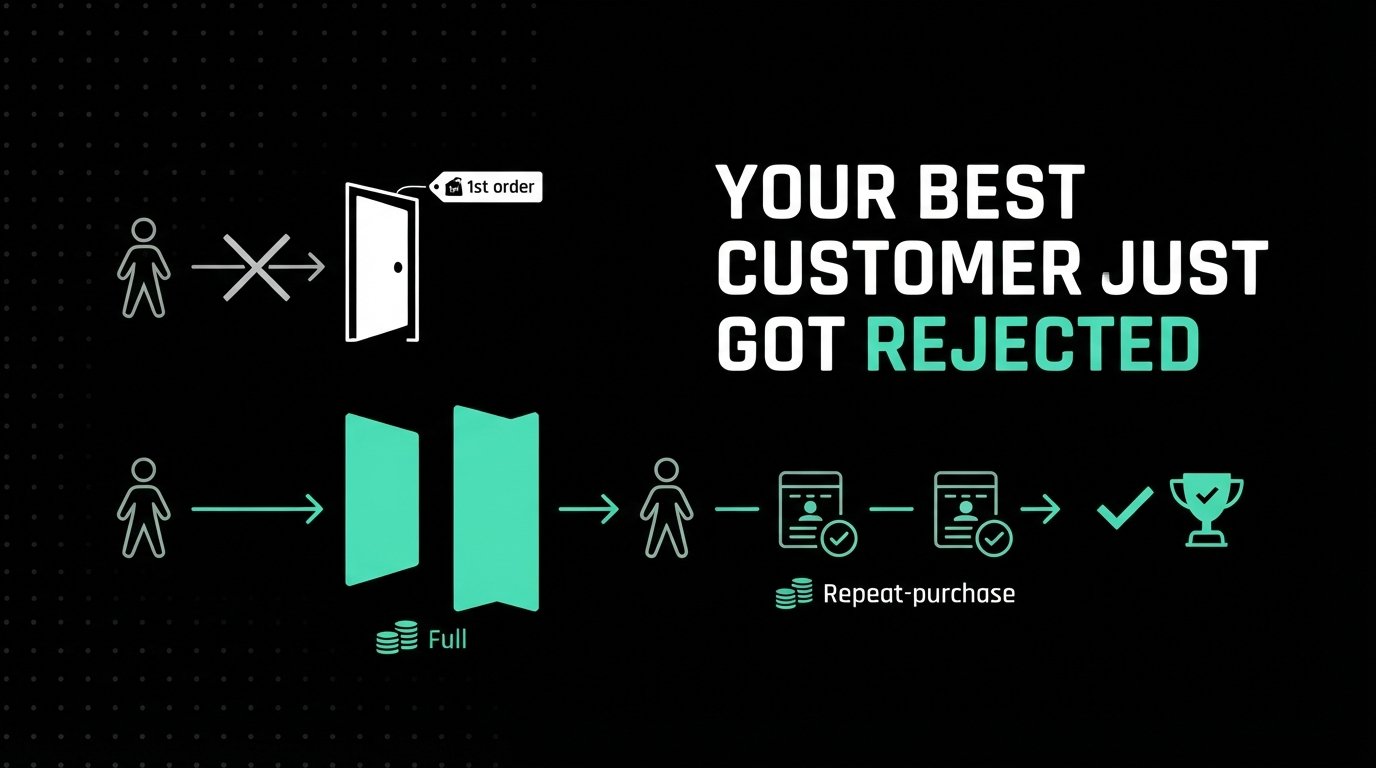
Most ad accounts are optimized to hit a ROAS target calculated from a single purchase — but if a customer’s real value shows up on their second or third order, a target built only around the first sale caps acceptable CAC below what that customer is actually worth, and the algorithm quietly stops pursuing them. A ROAS target that ignores repeat-purchase behavior isn’t protecting margin — it’s rejecting your most valuable customers before the account ever learns who they are.
Meta Social builds Meta Ads UAE targets from full customer lifetime value, not first-order revenue alone, recalibrating campaign targets as repeat-purchase data comes in.
The Target That Gets Set Once and Never Revisited
Most accounts get their ROAS or CPA target set once, at launch, based on the margin from a single order — then that number sits untouched for months. The problem isn’t that the target was wrong on day one. It’s that it never updates as real repeat-purchase data comes in, so an account acquiring highly valuable repeat customers keeps getting judged against a number that only ever described their first purchase.
Why a Single-Purchase ROAS Target Actively Filters Out Good Customers
Meta’s delivery algorithm optimizes toward whatever target it’s given — it treats a first-order ROAS target as the actual goal, not a proxy for something bigger. A segment that converts at a first-order ROAS just below target, but comes back to buy three more times over the year, looks like underperformance to an algorithm that only sees the first transaction. The account quietly deprioritizes exactly the audience that would have been most profitable.
How to Calculate What a Customer Is Actually Worth
Contribution margin per order — revenue minus COGS, shipping, and payment fees — multiplied by expected orders over a defined window, typically 12 months, gives a realistic lifetime value to compare acceptable CAC against, instead of margin from a single sale. A customer worth AED 150 in year-one contribution margin across three orders can justify a CAC that looks unprofitable judged against the first AED 50 order alone.
Rebuilding the ROAS Target Around Real Customer Value
When we take over an account, one of the first things we rebuild is the target itself — recalculating acceptable CAC against actual repeat-purchase data from the client’s own order history, not category assumptions. As a meta ads agency managing budget against that revised target, we routinely find campaigns the original setup was suppressing for looking unprofitable on a first-order basis, that were actually acquiring the highest-value customers in the account. As a performance marketing agency, correcting the target is often a bigger lever than any creative or bidding change.
Why This Compounds Over Every Reporting Cycle
A target that’s wrong in month one stays wrong every month after, because the algorithm keeps learning against the same flawed number. As a Meta Partner Agency, we treat target recalibration as a recurring task, not a one-time setup step — the same discipline that should apply to GEO agency work, where early assumptions about what content earns citations need revisiting as real data comes in, not left untouched for a year.
FAQs
Ask whether the target was calculated using repeat-purchase data or just the margin on a single average order. If nobody can point to the specific repeat-purchase rate and window used, it’s almost certainly a first-order target — which may be filtering out customers whose real value only shows up after the second or third purchase.
Twelve months is a reasonable default for most ecommerce categories — long enough to capture meaningful repeat behavior without extrapolating too far into uncertain future purchases. Categories with longer purchase cycles, like furniture, may need a longer window; fast-moving consumables can use a shorter one.
It can mean a higher acceptable CAC, which looks like worse short-term ROAS on the dashboard — but that’s the point. If the customer genuinely returns to purchase again, the higher upfront cost is recovered and then some. The risk only becomes real if repeat-purchase assumptions are wrong, which is why they need measuring from actual order history.
At minimum every quarter, using updated repeat-purchase data from the account’s own order history rather than launch assumptions. Accounts with fast purchase cycles or seasonal categories may need it reviewed monthly, since repeat-purchase patterns shift with promotions or seasonal demand.
Yes, with a different version of the same math — the ‘repeat purchase’ becomes the value of a closed deal, an upsell, or a renewal. A lead-gen business setting cost-per-lead purely on first-sale close rate, without accounting for renewal or upsell value, makes the identical mistake as an ecommerce account chasing first-order ROAS alone.
Key Takeaways
- A ROAS or CPA target calculated from a single purchase caps acceptable CAC below what a repeat customer is worth, causing the algorithm to deprioritize your most valuable customers.
- Meta’s delivery algorithm optimizes strictly toward the target it’s given — it has no way to know a customer will return unless that value is built into the target itself.
- Customer lifetime value should be calculated from contribution margin across a defined window, typically 12 months, not first-order margin alone.
- ROAS targets need recalculating on a recurring basis as real repeat-purchase data comes in, not set once at launch and left untouched.
Meta Social — Dubai’s #1 Performance Marketing Agency
Not sure if your ROAS target reflects what your customers are actually worth? Meta Social recalculates Meta Ads UAE targets against real repeat-purchase data. Get in touch at metasocial.ae
Performance Marketing | SEO & GEO | AI Creatives & Video | Attribution Architecture
metasocial.ae | Dubai, UAE
About Meta Social
Meta Social is Dubai’s leading performance marketing agency and the GCC’s AI-native growth partner. We specialise in Performance Marketing, SEO & GEO, AI Creatives & Video, and Attribution Architecture — managing AED 50M+ in paid media across real estate, fintech, e-commerce, and hospitality.
metasocial.ae | Dubai, UAE