
We Run Our Own D2C Brands: What Operating a Direct-to-Consumer Brand Taught Us About Agency Blind Spots
Direct Answer
Meta Social has planned and sequenced paid media budgets for driving institutes operating inside the UAE’s RTA-capped licensing structure, where the addressable audience on any single platform is fixed and every extra dirham of spend has to work harder to find a new prospect. That planning experience is what shapes the framework below: a single-platform ad budget hits a reach ceiling fast in a small, regulated vertical like UAE driving instruction. The RTA licenses a limited number of approved institutes, so the addressable audience on any one platform saturates quickly. The fix is sequencing additional platforms — typically Meta, Google, Snapchat, and TikTok — as controlled, incrementally funded tests against an existing baseline, not switching budget all at once. The worked example below is illustrative — it isn’t a specific client’s reported results.
Why Most Agencies Never See the Real Problem
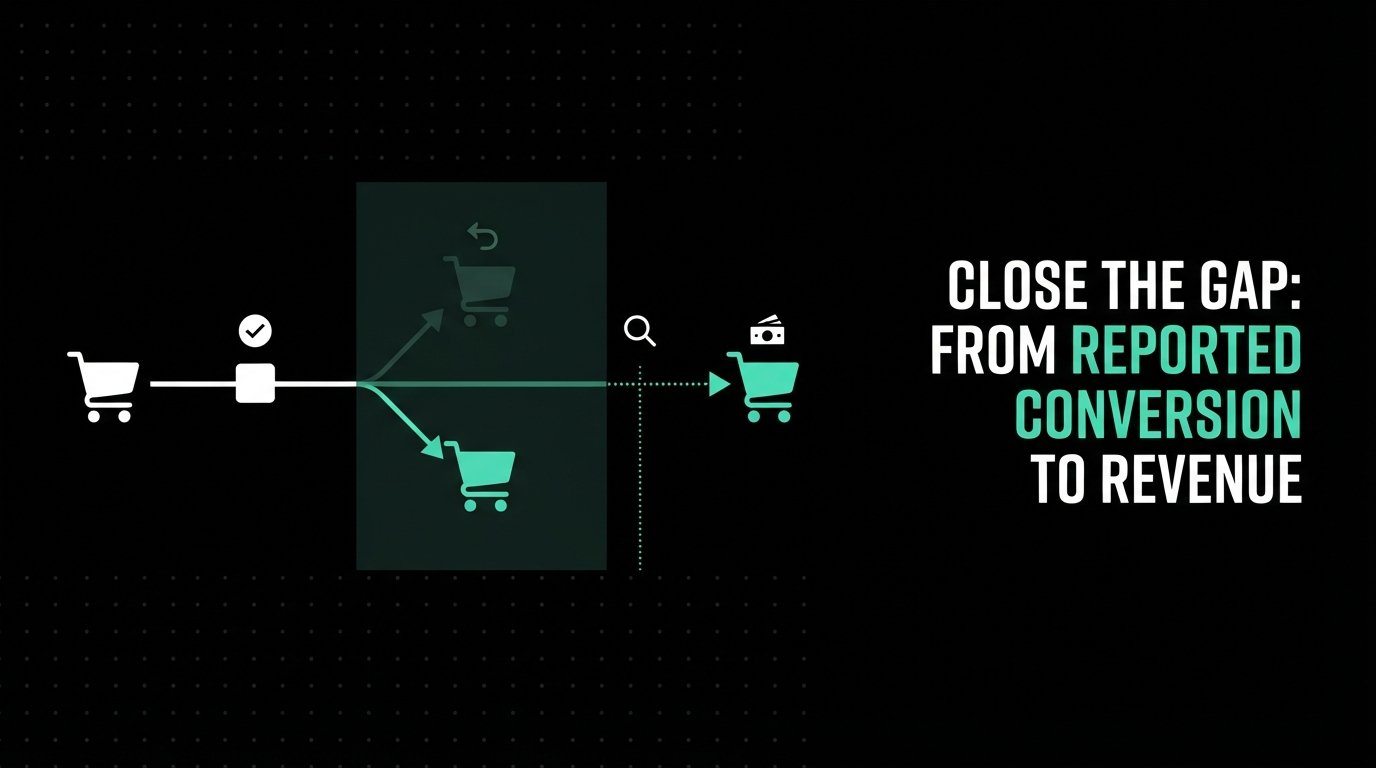
A campaign-management agency is accountable for what happens up to platform-reported conversion. Everything downstream — delivery success, whether the customer pays at the door, returns — sits outside most agencies’ line of sight. Cash-on-delivery orders in the UAE carry a return-to-origin rate of approximately 19–20%, compared to roughly 6–8% for prepaid. COD remains dominant: roughly three-quarters of UAE online shoppers prefer to pay on delivery.
A platform records a conversion the instant an order is placed. Whether it’s ever actually delivered and paid for is a separate event, reported through courier remittance data — not ad platform data. An agency optimising to the first event alone is, by construction, blind to the second. This structural gap exists regardless of how capable the agency is — it’s a function of what they’re measured on, not how carefully they work. For a brand running at high COD volume, the delta between reported conversions and completed, paid deliveries can be significant enough to flip a campaign from profitable to loss-making — without any change in the reported metrics. The only way to see it is to connect ad data to courier remittance data on a regular cycle.
What Changes When You Look Beyond Campaign Metrics
Running ads means being accountable for cost-per-lead and platform-reported ROAS. Operating a brand means being accountable for what’s in the bank account after remittance delays and returns. Looking beyond campaign metrics means measuring what happens after an order is placed. True campaign performance isn’t defined by reported ROAS alone, but by completed deliveries, collected revenue, and long-term profitability. An agency that has never reconciled a reported ROAS figure against a bank statement is missing information that changes how a campaign should be judged.
This changes what gets checked at the campaign level. On Meta Ads UAE campaigns for COD-heavy categories, we look at payment-method mix, delivery completion rates by courier, and remittance lag — not just cost per reported conversion.
What This Changes About How We Work
Payment-method mix gets checked before a campaign is declared successful. A high-COD campaign in a high-RTO category needs a different success bar than one driving prepaid conversions.
Reported ROAS and actual collected revenue are treated as two different numbers that need reconciling — the same blended-ROAS, CRM-verified-revenue principle applied to every engagement, developed through analysing real-world campaign performance across UAE D2C businesses.
Creative and offer decisions get evaluated against downstream reliability, not just upfront conversion rate. For any D2C brand running at meaningful COD volume in the UAE, the campaign metrics reported by a Meta Ads Agency need to be reconciled against courier remittance data on a regular cycle. That reconciliation is what separates a real profitability read from an optimistic dashboard.
FAQs
Because ROAS measures advertising efficiency, not completed deliveries, collected revenue, returns, or contribution margin. Businesses should evaluate campaign performance against real commercial outcomes rather than platform-reported conversions alone.
No. The operator experience shapes methodology — not resource allocation or data sharing.
The gap between platform-reported conversion and actual collected revenue — especially visible in a COD-heavy market where roughly one in five orders never completes as a paid, delivered sale.
Key Takeaways
- UAE COD orders carry a documented 19–20% return-to-origin rate, against 6–8% for prepaid — a gap invisible to standard reported-conversion metrics.
- A pure-agency model is structurally accountable only up to reported conversion, not what happens afterward.
- Real profitability comes from measuring what happens after the conversion—not just the conversion itself.
- This is a methodology difference, not a conflict of interest.
META SOCIAL — DUBAI’S #1 PERFORMANCE MARKETING AGENCY
Meta Social helps UAE D2C businesses build profitability-focused growth strategies by connecting advertising performance with real commercial outcomes. as a trusted Meta Ads Agency — building evaluation methodology from real P&L accountability. Talk to our team at metasocial.ae.
Performance Marketing | SEO & GEO Agency | AI Creatives & Video | Attribution Architecture metasocial.ae | Dubai, UAE
About Meta Social
Meta Social is a leading Performance Marketing Agency and the GCC’s AI-native growth partner. As a certified Meta Business Partner and Meta Partner Agency, we specialise in Performance Marketing, SEO & GEO Agency services, AI Creatives & Video Production, and Attribution Architecture — managing AED 50M+ in paid media spend across Meta Ads UAE and GCC campaigns in real estate, fintech, e-commerce, and hospitality.
metasocial.ae | Dubai, UAE