
The First-Mover Trap: Why Being Early Often Means Paying to Educate Your Competitor's Future Customers
Direct Answer
Being first into a market is treated as an automatic strategic advantage. It frequently isn’t. The company that enters first often has to fund something no later entrant pays for: teaching the market that a problem exists and a solution is worth paying for. That education cost shows up in acquisition spend, in content investment, in the sheer effort of explaining a category nobody was searching for yet. A fast follower arriving once that education is done can capture demand the first mover created, at a fraction of the cost. As a performance marketing agency, we help clients weigh this cost honestly before racing to launch.
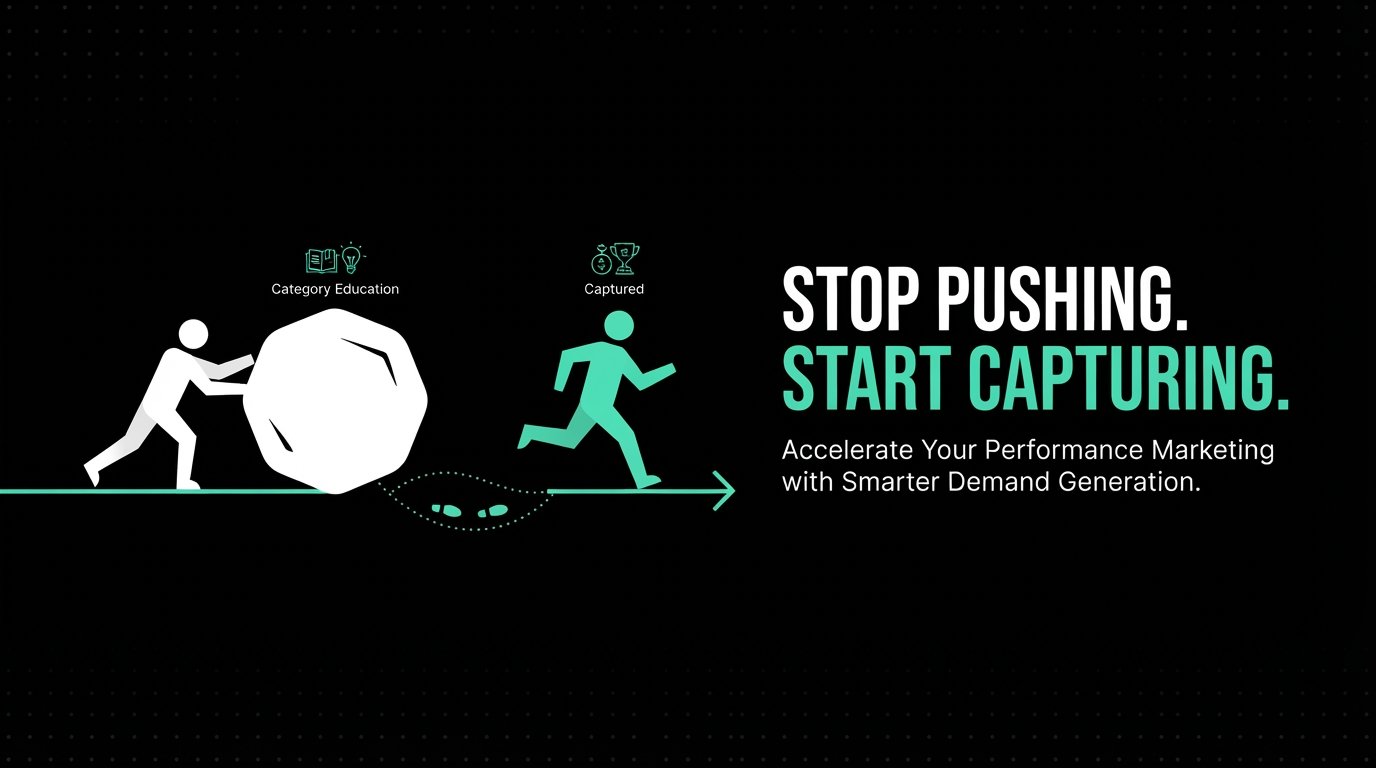
A company launches first in a genuinely new category, spends two years building market awareness from nothing, and watches a fast-following competitor arrive and capture the majority of the resulting demand — at a fraction of the acquisition cost the first mover paid to create that demand in the first place.
This isn’t bad luck or weak execution. It’s the predictable outcome of a cost that first-mover advantage, as a concept, rarely accounts for.
What “First-Mover Advantage” Actually Assumes
The phrase assumes the market already understands the problem being solved — that customers are simply waiting to be shown the best available option. For a genuinely new category, that assumption is usually false. The market doesn’t yet know it has the problem, let alone that a solution exists.
Correcting that gap in understanding is expensive, and the entire cost falls on whoever arrives first. Nobody else has to pay it, because by the time they arrive, the correction has already been made.
The Education Subsidy
Market entrants can be plotted by how much category-education cost they absorbed versus how much value they ultimately captured. First movers frequently sit in the high-subsidy, lower-capture zone — funding the market’s understanding of a problem that a later entrant, arriving once the education is already done, captures more efficiently.
A Meta ads agency account for a genuinely new category will often show acquisition costs several multiples higher than a comparable, already-understood category — the price of explaining why a problem matters before ever getting to explain why one company’s solution is the best one.
Where the Subsidy Shows Up Most Clearly
Category-level content — material explaining why a problem matters at all, not just why a specific solution is best — is expensive to produce and rarely gets full credit once a fast follower shows up. A GEO agency building this kind of foundational content is often, unintentionally, building assets that make the category easier to understand for everyone who enters after, including direct competitors who never contributed to creating it.
When Being First Actually Is Worth It
First-mover advantage still pays off when something genuinely structural compounds during the education period — proprietary data accumulated while the fast follower was still catching up, network effects that make the product more valuable with each early user, exclusive relationships locked in before competitors noticed the category existed. These are the kinds of advantages that survive a fast follower’s arrival, rather than simply inviting one to capture the demand for free.
Deciding Whether to Move First or Wait
Before racing to launch, the honest exercise is estimating the likely education subsidy and asking whether anything durable will exist by the time a fast follower inevitably arrives. A Meta Partner Agency involved in this decision early can help model that trade-off before a launch date gets locked in for reasons that have nothing to do with the actual math — competitive anxiety, board pressure, or simply the appeal of being able to say a company was first.
FAQs
No — it means entering first should be a deliberate bet on building something structural during the education period, not an assumption that timing alone creates lasting advantage.
Compare acquisition costs in the closest analogous, already-understood category against realistic estimates for a genuinely new one — the gap is a reasonable proxy for the subsidy a first mover should expect to pay.
Structural assets that compound during the education period — proprietary data, network effects, exclusive relationships — rather than category awareness alone, which is inherently available to anyone who arrives after it’s already been built.
Key Takeaways
- Being first into a category often means paying to teach the market a problem exists — a cost later entrants skip entirely.
- Fast followers can capture demand a first mover created, at a fraction of the acquisition and content cost.
- First-mover advantage only holds up when something structural compounds during the education period — not from timing alone.
Meta Social — Dubai’s #1 Performance Marketing Agency
Meta Social builds demand-generation systems, not just traffic campaigns — content, positioning, and trust-building that convert cold clicks into buyers.
Performance Marketing | SEO & GEO | AI Creatives & Video | Attribution Architecture
metasocial.ae | Dubai, UAE
About Meta Social
Meta Social helps GCC founders weigh the real cost of market timing — modeling the education subsidy before a launch decision, not just executing whichever date gets picked. metasocial.ae
META SOCIAL — DUBAI’S PERFORMANCE MARKETING & AI-NATIVE GROWTH PARTNER