
Why Your Dubai Business Needs a Different
AI Visibility Strategy for B2B vs B2C
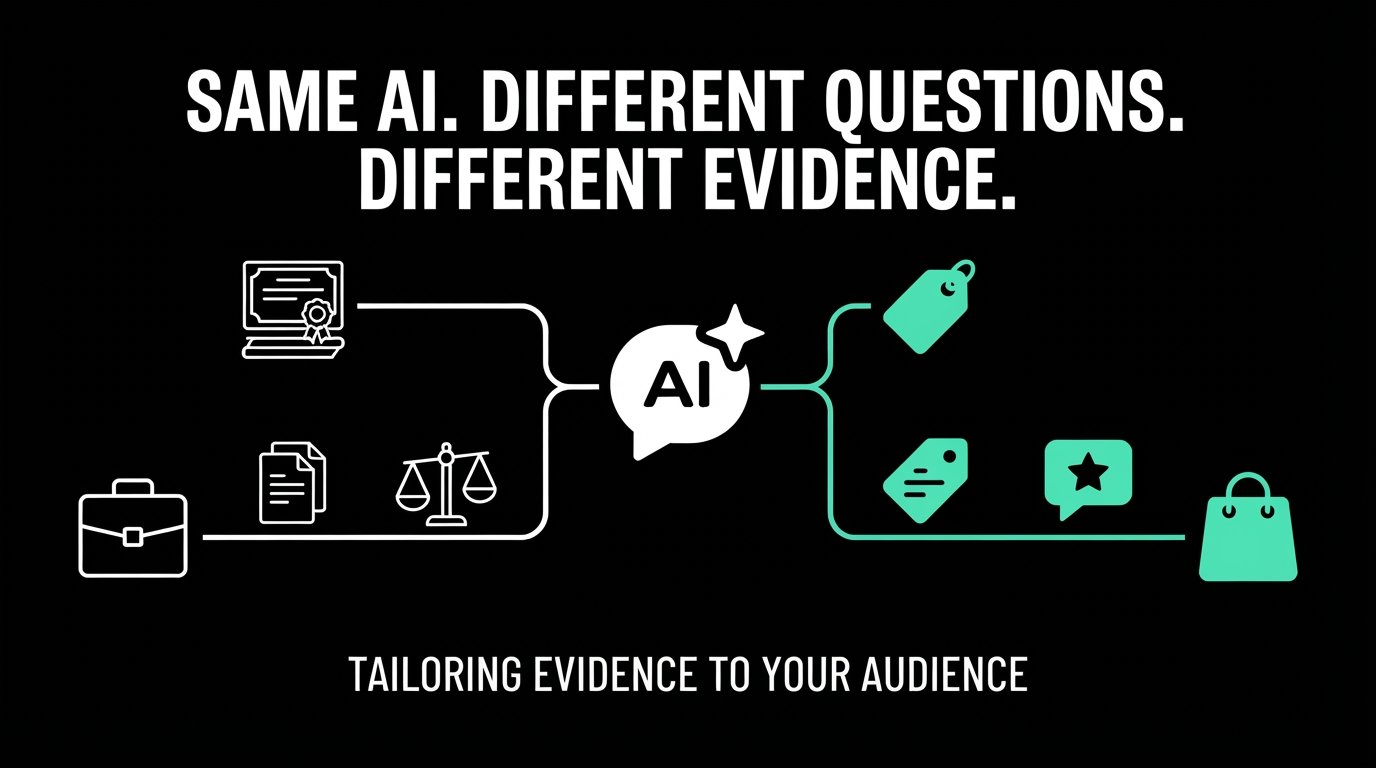
B2B and B2C buyers may use the same AI platforms, but they do not ask them the same questions or evaluate businesses in the same way. B2B buyers tend to look for expertise, evidence, comparisons, implementation details and signals of credibility. B2C buyers are more likely to care about price, availability, location, reviews, suitability and the immediate fit of a product or service.
Meta Social approaches AI visibility from the buyer journey backwards. Instead of trying to make a Dubai business appear in every AI answer, we build the evidence, content and third-party signals that match how its actual customers evaluate a purchase — then connect that visibility strategy with search, paid acquisition and conversion data.
The Same AI Answer Can Mean Two Very Different Things
A customer asking an AI tool for “the best business in Dubai” is not necessarily looking for the same evidence as a procurement manager asking which software provider can handle a specific enterprise requirement.
That distinction matters because AI visibility is not simply about getting a brand mentioned. The useful question is: what information does the buyer need before they are willing to shortlist you?
For a B2B company, the answer may involve expertise, technical capability, integrations, case studies, certifications, pricing models and proof that the provider understands a complex problem. For B2C, the decision may depend more on reviews, product attributes, price, location, availability and whether the offering fits a specific need.
A meta ads agency can generate demand, but AI visibility influences what happens when a prospect starts researching the options beyond the ad. If the information ecosystem around the brand does not answer the buyer’s real questions, visibility alone is not enough.
B2B Needs Evidence. B2C Needs Relevance.
B2B AI visibility is built around proof. The content needs to demonstrate expertise rather than simply describe services. Detailed explainers, original insights, comparisons, case studies, technical documentation and credible third-party references give AI systems more useful material to work with.
B2C visibility is more often built around decision context. Consumers may want to know what something costs, where it is available, how it compares with alternatives, what other customers think, and whether it suits their particular situation.
Neither model is exclusive. A consumer buying a high-ticket property may need substantial evidence and trust, while a small business buying a simple service may behave more like a consumer.
The point is not to create separate AI content because the label says “B2B” or “B2C.” The point is to identify the information threshold that exists between discovery and decision.
This is where a geo agency should start: with the buyer’s questions, not with the AI platform.
Build the Visibility Layer Around the Buying Journey
Once the buyer’s information needs are clear, the content strategy becomes much more practical.
For B2B, build around questions that help a serious buyer reduce risk:
- What does the provider actually specialise in?
- How does the solution work in a real business environment?
- What evidence supports the claims
- How does it compare with realistic alternatives?
- What implementation, compliance or operational considerations matter?
For B2C, the questions often shift toward:
- Is this right for my needs?
- How much does it cost?
- Where can I get it
- How does it compare with other options
- What are real customers saying about it?
An AI agency Dubai team should then turn those questions into a connected information system rather than a collection of disconnected blog posts. The goal is to make the brand easier to understand, verify and recommend when relevant.
What UAE Brands Should Fix First
If your brand is trying to improve AI visibility, don’t begin by publishing more generic “AI SEO” content.
Start by deciding what a buyer needs to believe before choosing you.
- Map the real buyer questions. Separate research questions from final purchase questions and identify which ones AI is likely to answer.
- Build evidence around those questions. Use original expertise, case studies, product or service detail, data and clear explanations rather than generic category content.
- Strengthen third-party validation. Independent references, credible publications, industry sources and customer evidence can provide context that a brand’s own website cannot provide alone.
- Keep business information consistent. Company descriptions, services, locations, leadership, products and other important facts should not conflict across the web.
- Connect AI visibility to acquisition. A performance marketing strategy should not stop at the impression or click. Understand what happens when prospects move from paid discovery into independent research and comparison.
For businesses working with a meta partner, SEO/GEO and paid acquisition should use the same positioning and evidence base. The channels may generate different kinds of demand, but the buyer still needs one coherent story.
FAQs
Not completely. The underlying principles are similar, but the content and evidence should reflect how each audience researches, evaluates risk and makes decisions.
Yes. Recent B2B research indicates growing use of generative AI and conversational search during research and vendor evaluation. The practical implication is that businesses need useful, verifiable information available throughout the research journey.
The better starting point is the buyer and the questions they ask. Platform-specific testing can follow, but building a useful information footprint is more durable than optimising for one AI system.
No. AI visibility is another discovery layer. Strong brands still need a technically sound website, search visibility, credible content, paid acquisition where appropriate and measurement across the full customer journey.
Key Takeaways
- B2B and B2C buyers can use the same AI tools but need different evidence before choosing a business.
- B2B visibility should emphasise expertise, proof, comparisons and risk reduction.
- B2C visibility should emphasise relevance, price, availability, reviews and product or service fit.
- Start with buyer questions, then build the content and information footprint around them.
Meta Social — Dubai’s #1 Performance Marketing Agency
Meta Social treats account infrastructure as part of campaign performance. Our Meta partner approach combines Meta ads agency execution, performance marketing strategy and structured account governance so businesses can scale without avoidable infrastructure issues. Visit metasocial.ae
Performance Marketing | SEO & GEO | AI Creatives & Video | Attribution Architecture
metasocial.ae | Dubai, UAE
About Meta Social
Meta Social is Dubai’s leading performance marketing agency and the GCC’s AI-native growth partner. We specialise in Performance Marketing, SEO & GEO, AI Creatives & Video, and Attribution Architecture — managing AED 50M+ in paid media across real estate, fintech, e-commerce, and hospitality.
metasocial.ae | Dubai, UAE