
Brand Safety in UAE Digital Advertising: What GCC Brands
Need to Know About Where Their Ads Are Actually Appearing
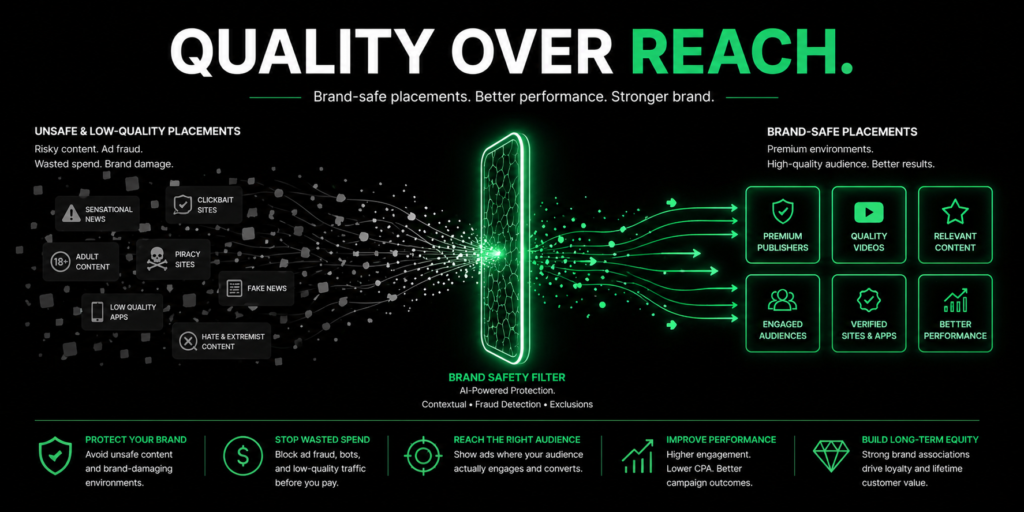
Most UAE brands have no idea where their programmatic and Meta ads are actually appearing. The answer, in many cases, would concern them. Brand safety — ensuring your ads don’t appear alongside inappropriate, low-quality, or brand-damaging content — is a discipline that most UAE performance marketing teams treat as a checkbox rather than an active management priority. In a GCC market with specific cultural sensitivities, regulatory content standards, and a premium brand positioning most advertisers are trying to maintain, brand safety is not optional. It is a commercial performance issue as much as a reputation one. As a certified meta partner agency, Meta Social implements brand safety controls as standard — because an ad appearing in the wrong context costs more than the impression is worth.
Why Brand Safety Is a GCC-Specific Priority
The UAE and GCC are markets where brand positioning is disproportionately important to purchase decisions — particularly for premium, luxury, and professional service categories. A luxury real estate developer’s ad appearing alongside low-quality clickbait content, or a premium healthcare brand’s ad appearing next to sensationalist news, creates a negative association that damages the precise positioning the marketing budget was built to establish.
There is also a regulatory dimension. The UAE National Media Council has specific standards for advertising content and context. Brands whose ads are associated with non-compliant content — through programmatic placement — can face regulatory scrutiny that their advertising spend created inadvertently.
The Five Brand Safety Control Layers
1. Meta Placement Exclusions
Meta’s Inventory Filter settings offer three levels: Expanded (maximum reach, minimum brand safety), Moderate (Meta’s recommended default), and Limited (highest brand safety, reduced reach). For premium UAE brands in real estate, healthcare, and luxury categories, Limited inventory setting is the appropriate default. Additionally, specific content categories can be excluded: sensitive social issues, gambling-adjacent content, debated social issues. A performance marketing agency configuring Meta campaigns for premium UAE brands should be setting explicit placement exclusions as a campaign setup standard.
2. Audience Network Exclusions
Meta’s Audience Network extends your ads to third-party apps and websites outside of Facebook and Instagram. For premium brands, Audience Network often represents the lowest-quality and least brand-safe placements in the campaign. Most premium UAE brand campaigns should exclude Audience Network entirely, accepting the reach reduction in exchange for placement quality control. The CPM savings from Audience Network rarely justify the brand safety and conversion quality risks for high-ticket categories.
3. Programmatic DSP Brand Safety Controls
For UAE brands running display, native, or video advertising through programmatic platforms (DV360, The Trade Desk, Xandr), brand safety controls include pre-bid filtering (blocking ad requests from sites on brand safety blocklists before the impression is purchased), contextual targeting (only serving ads in contexts directly relevant to your category), and post-bid monitoring (reviewing actual placement reports and adding specific sites to block lists). A specialist ai agency Dubai managing programmatic campaigns for UAE brands implements all three layers — not just the platform’s default settings.
4. YouTube Channel Exclusions
YouTube advertising in the UAE requires explicit channel exclusion lists for brand safety. Without exclusions, YouTube ads can appear against content that is culturally inappropriate for GCC audiences, politically sensitive, or simply low-quality. Building a UAE-specific channel exclusion list — including known low-quality, sensationalist, or culturally misaligned channels — should be part of every YouTube campaign setup. A geo agency maintaining ongoing placement reports for YouTube campaigns typically identifies 15–25% of impressions on excluded-quality channels in the first audit — an immediate campaign quality improvement at no additional cost.
5. Verified Measurement and Ad Fraud Prevention
Ad fraud — fake impressions, bot traffic, and click farms — is a significant issue in GCC programmatic advertising. UAE advertisers using programmatic DSPs without third-party measurement verification (IAS, DoubleVerify, MOAT) are likely paying for 10–20% fraudulent impressions in their campaigns. Implementing verification tags that detect and block fraudulent traffic reduces wasted spend while improving the quality of the genuine impressions remaining in the campaign.
Brand Safety and Performance — The Connection
Brand safety controls are often presented as a brand protection cost that reduces performance. The reality is the opposite: ads appearing in brand-safe, high-quality contexts generate higher engagement, higher recall, and higher conversion rates than the same ads in brand-unsafe contexts. The reach reduction from excluding low-quality placements is more than compensated by the quality improvement in remaining impressions. A campaign with 80% brand-safe reach consistently outperforms a campaign with 100% reach and 20% fraudulent or low-quality impressions.
FAQs
Download the Placements Breakdown report from Meta Ads Manager for all active campaigns. Filter for Audience Network placements specifically. Review the site and app categories where Audience Network impressions were served. Compare conversion rates from Audience Network versus Instagram and Facebook Feed placements — in most cases, Audience Network will show significantly lower conversion rates, justifying its exclusion.
Keyword blocking in brand safety contexts (Google Display Network and YouTube) can reduce reach by 5–15% depending on category. For premium UAE brands, this reach reduction is appropriate — it means your ads are not appearing in contexts that would damage brand positioning. The performance impact of appearing in the wrong context (lower engagement, lower conversion, potential brand damage) exceeds the performance impact of reduced reach.
Ongoing. New content, new apps, and new placements are added to programmatic ecosystems continuously. Brand safety lists need quarterly review at minimum — and immediate update when news events, platform policy changes, or specific placement incidents require response. A specialist performance agency builds brand safety review into its regular reporting cadence, not as a reactive response to incidents.
Key Takeaways
✓ Brand safety in the GCC is a commercial performance issue as well as a reputation issue — misaligned placements damage the exact positioning the budget was built to establish.
✓ Meta Audience Network exclusion is the single highest-impact brand safety control for most UAE premium brand campaigns.
✓ Programmatic brand safety requires three layers: pre-bid filtering, contextual targeting, and post-bid placement monitoring.
✓ Brand-safe campaigns consistently outperform unrestricted campaigns on conversion quality — the reach reduction is more than compensated by impression quality improvement.
Meta Social — Dubai’s #1 Performance Marketing Agency Meta Social — Dubai’s #1 performance marketing agency — answers all eight questions confidently and builds infrastructure you own. Start the conversation at metasocial.ae Performance Marketing | SEO & GEO | AI Creatives & Video | Attribution Architecture metasocial.ae | Dubai, UAE |
About Meta Social Meta Social is Dubai’s #1 performance marketing agency and the GCC’s leading AI-native growth partner. As a certified meta partner agency and leading ai agency dubai, we specialise in Performance Marketing, SEO & GEO Strategy, AI Creatives & Video Production, and Attribution Architecture. Our team has managed AED 50M+ in paid media spend across real estate, fintech, e-commerce, and hospitality. metasocial.ae | Dubai, UAE |