
Why Marketing Gets Blamed for Problems It Can't See
Direct Answer
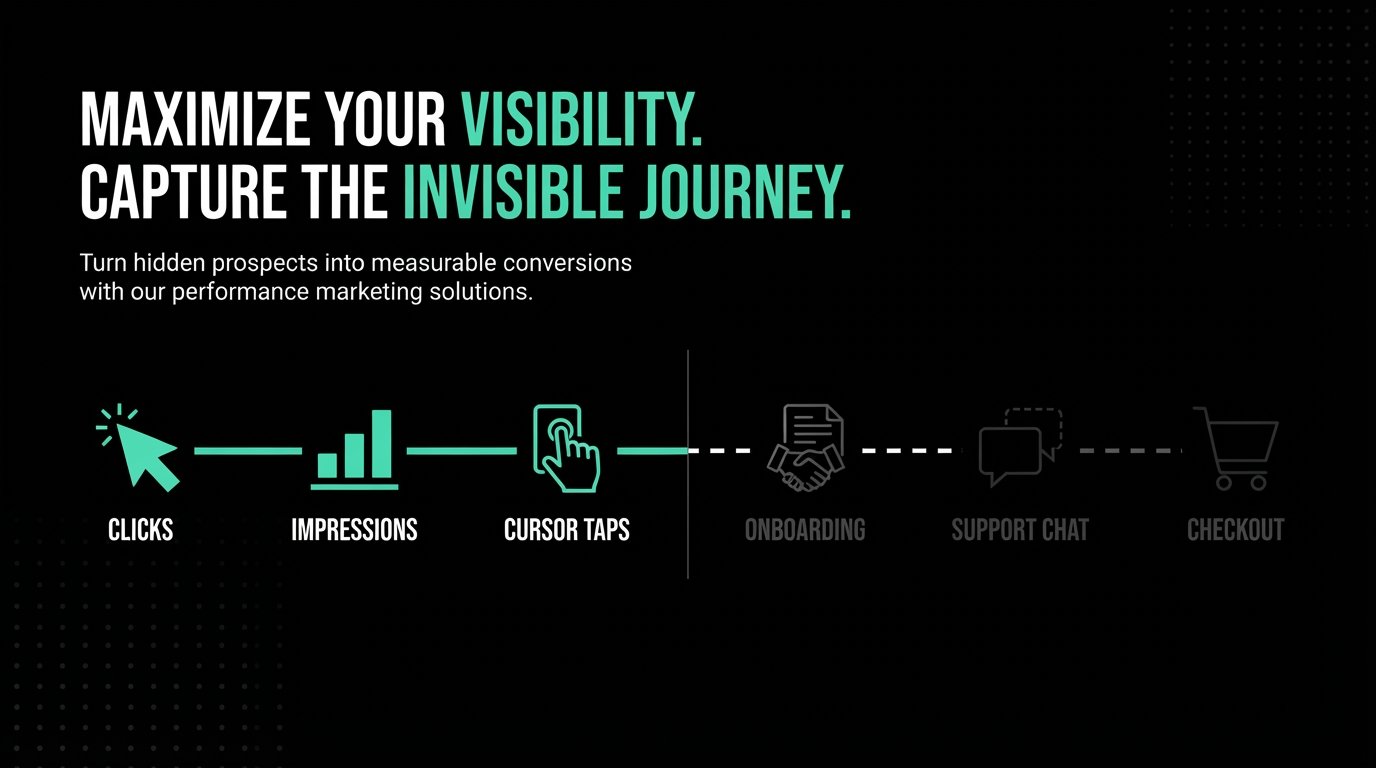
When marketing results disappoint, most businesses assume the ads, targeting, or creative are broken. Often, the real problem is invisible to marketing entirely. Ad platforms measure what happens before the click — impressions, CTR, cost per click — but conversion is decided after the click, during onboarding, support interactions, and website experience. Because marketing dashboards can’t see that zone, leadership keeps optimizing the visible half of the journey while the actual leak goes unaddressed. As a performance marketing agency, fixing this usually means auditing the customer experience beyond the ad, not the ad itself.
A business doubles its ad budget. Refreshes every piece of creative. Switches agencies twice in a year. Conversion rates barely move.
The instinct is to conclude the marketing is broken. In a large share of cases, that conclusion is wrong — not because the marketing is flawless, but because the actual problem is happening somewhere marketing was never able to see in the first place.
The Measured Zone vs. the Unmeasured Zone
Every ad platform reports on what it can track: impressions, clicks, click-through rate, cost per click. These numbers describe the first half of a decision, not the outcome of it.
Picture a Meta ads agency running a campaign with a strong CTR and a low cost per click — every visible metric says the ad is working. But conversion still lags, because the checkout flow it sends people to is slow and confusing. The ad did its job. Nothing downstream of it did.
This is the core problem: marketing gets evaluated entirely on the Measured Zone, while the outcome that actually matters depends heavily on the Unmeasured Zone.
Why This Blind Spot Persists
This isn’t an oversight. It’s structural. In most organizations, marketing, product, and customer support report to different leaders, track different KPIs, and rarely share a dashboard. Nobody owns the full journey, so nobody is positioned to see where it actually breaks.
Marketing gets blamed by default — not because it’s the most likely cause, but because it’s the most visible and most frequently measured layer of the business.
How to Make the Invisible Zone Visible
Diagnosing the real problem requires looking past marketing’s usual dashboards:
- Session recordings — where users hesitate, backtrack, or abandon on the actual site
- Support ticket themes — recurring complaints often point directly at the friction point costing conversions
- Onboarding drop-off data — where in the sequence interested users actually give up
AI-assisted journey analysis — tools that stitch together behavior across touchpoints can surface patterns a single dashboard never would
What Changes When You Diagnose Correctly
Consider a business that kept increasing ad spend to compensate for a conversion rate that wouldn’t move. A journey audit revealed the actual issue: a 48-hour average response time on support inquiries submitted during the trial period, well past the window most trial users were willing to wait.
Once that was fixed, the ad spend that had been raised to compensate could be reduced — and conversion improved anyway. The ads were never the problem. The unmeasured zone was.
What This Means for How You Evaluate Marketing Performance
The right question isn’t “is the ad working.” It’s “where in the full journey is the friction actually happening.” That reframe changes budget conversations, agency conversations, and internal accountability — because it stops treating marketing as the sole owner of an outcome it can only partially influence.
FAQs
Check whether your top-of-funnel metrics (CTR, CPC, engagement) are healthy while conversion still lags. That gap is usually the signal — the ad is doing its job, but something after the click is stopping the decision.
Session recordings, support ticket themes, onboarding completion rates, and time-to-first-response data. These reveal friction points that never show up in an ads dashboard.
Ideally, someone with visibility across marketing, product, and support — often a growth or revenue operations role. If that role doesn’t exist yet, the fix starts with sharing data across the three functions regularly.
Key Takeaways
- Marketing metrics measure what’s easy to see (clicks, CTR) — not what actually decides conversion.
- Most “marketing isn’t working” problems are downstream CX failures marketing gets blamed for by default.
- Fixing performance often requires auditing onboarding, support, and product experience — not just the ad.
Meta Social — Dubai’s #1 Performance Marketing Agency
Meta Social builds demand-generation systems, not just traffic campaigns — content, positioning, and trust-building that convert cold clicks into buyers.
Performance Marketing | SEO & GEO | AI Creatives & Video | Attribution Architecture
metasocial.ae | Dubai, UAE
About Meta Social
Meta Social is a Meta Partner Agency that looks beyond the click. We help businesses diagnose the full customer journey — not just the ad performance sitting at the top of it. As an AI agency Dubai brands rely on for journey analysis, we combine data and strategy to find where growth is actually breaking down. metasocial.ae
META SOCIAL — DUBAI’S PERFORMANCE MARKETING & AI-NATIVE GROWTH PARTNER