
Your Most Loyal Customers Might Just Be Your Most Inconvenienced Ones
Direct Answer
A healthy repeat-purchase rate is treated as proof of customer loyalty. It often isn’t — it can just as easily be evidence of inertia. Customers who keep buying because they genuinely prefer a brand and customers who keep buying because switching feels inconvenient look identical in a standard loyalty dashboard. The difference only becomes visible the moment a competitor makes a genuinely better offer — one group stays, the other leaves immediately. A Meta ads agency watching how customers respond when exposed to competitor retargeting can actually see this distinction play out in real behavior, not just repeat-purchase counts.
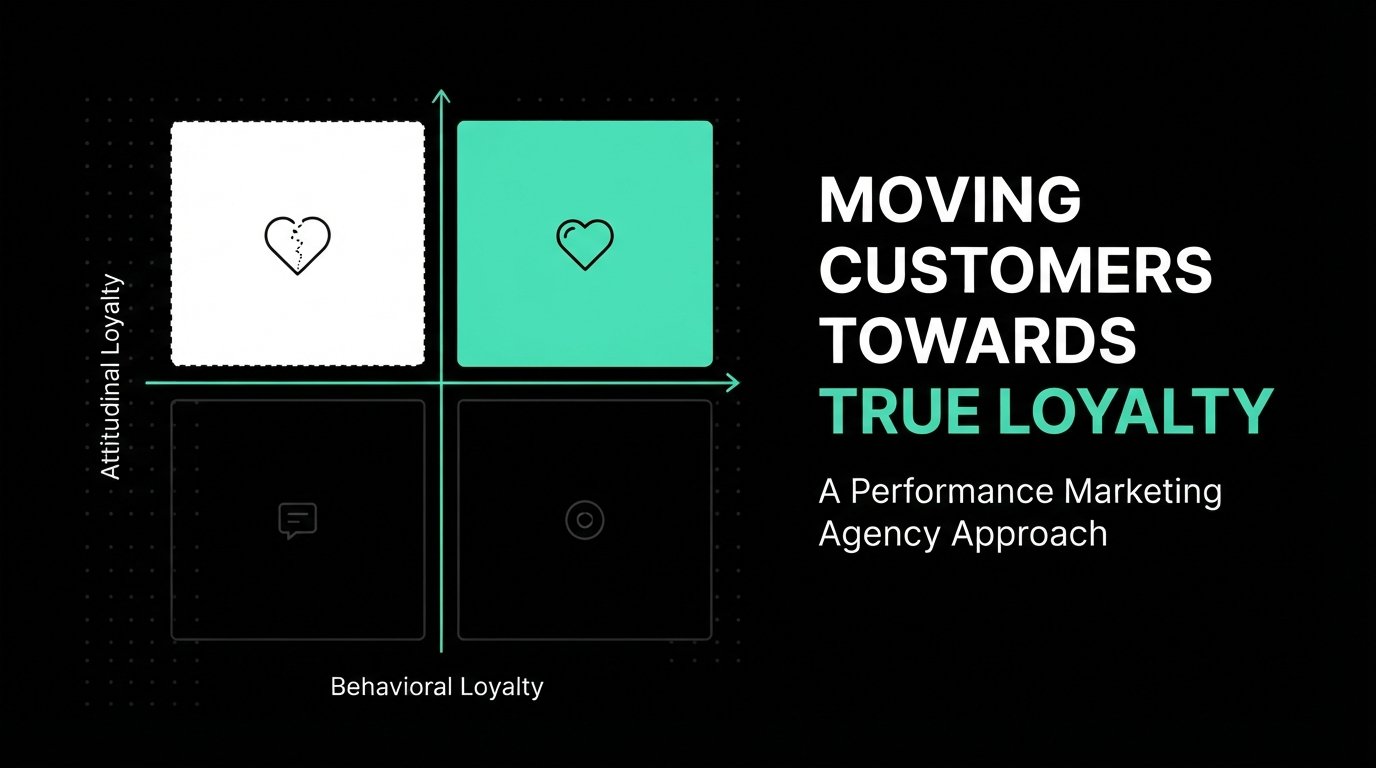
A company with a well-performing loyalty program watches a meaningful share of its “most loyal” customers defect the moment a competitor runs an aggressive, genuinely better offer. The defection looks sudden from the inside. It wasn’t — the vulnerability was there the entire time, hidden behind a repeat-purchase metric that never actually measured what the company assumed it measured.
This is a more common failure than most retention reporting admits, because the metric everyone relies on genuinely cannot distinguish between two very different kinds of customer.
Why Repeat Purchase Isn’t the Same as Preference
A customer can keep buying from a brand for reasons that have nothing to do with liking it more than the alternatives — unfamiliarity with competitors, the effort of switching accounts or subscriptions, or simply never having been prompted to compare in the first place. None of that is loyalty in any meaningful sense. It’s the absence of a reason to leave, which is a very different thing from a reason to stay.
The Loyalty Quadrant
Customers can be plotted on two axes: Behavioral Loyalty (repeat purchase frequency) against Attitudinal Loyalty (genuine preference, independent of convenience). Four zones emerge. True Loyalty: high on both — genuinely resilient to a competitor’s offer. Captive: high behavioral, low attitudinal — vulnerable to the first better offer that reaches them. Latent: low behavioral, high attitudinal — customers who prefer the brand but aren’t buying often, frequently underserved and ignored. Switchable: low on both.
A performance marketing agency loyalty program report showing strong behavioral metrics across the board can mask a large segment of genuinely Captive customers who had simply never been tested against a real alternative — the dashboard looks healthy right up until it isn’t.
Why Captive Customers Are the Most Dangerous Segment to Misread
Captive customers look identical to True Loyalty customers on every standard dashboard, right up until a competitor gives them a reason to switch. At that point, the defection looks sudden and unexplainable to a team that was
reading repeat-purchase data as if it were preference data — even though the vulnerability had been sitting there, invisible, the whole time.
This is what makes the Captive zone genuinely dangerous rather than just an interesting distinction. A team that mistakes Captive customers for True Loyalty customers isn’t just misreading a metric — it’s under-investing in exactly the relationship most at risk of leaving, because the dashboard gave no reason to think extra investment was needed there at all.
Finding the Attitudinal Signal
Genuine preference shows up in language, not just transaction data — unprompted reviews, open-ended survey responses, direct customer feedback that goes beyond a satisfaction score. An AI agency Dubai teams increasingly rely on for this can analyze that language at scale to separate attitudinal signal from behavioral noise far faster than manual review ever could, surfacing which “loyal” customers are genuinely there by preference.
Building a Loyalty Program That Rewards the Right Thing
The practical shift is evaluating loyalty programs by Loyalty Quadrant placement, not repeat-purchase count alone. A Meta Partner Agency helping design retention strategy should be pushing for that distinction explicitly — it changes both what gets measured and what actually gets incentivized, moving reward structures away from simply rewarding purchase frequency and toward genuinely earning preference.
FAQs
Analyze unprompted language — reviews, open-ended survey responses, support interactions — for genuine preference signals, rather than relying only on structured satisfaction scores that don’t capture the same nuance.
Treat them as a genuine retention risk, not a solved segment — proactively strengthen the relationship through service or product experience rather than assuming their repeat purchases mean the relationship is secure.
Yes, but it requires giving them an actual reason to prefer the brand, not just continued convenience — genuine product or service improvements they experience directly, not further incentives that just reinforce the existing inertia.
Key Takeaways
- Repeat purchase behavior can reflect genuine preference or simple inertia — standard loyalty metrics can’t tell the two apart.
- Captive customers look identical to truly loyal ones until a competitor gives them a real reason to switch.
- Loyalty programs should be evaluated by attitudinal signal, not just repeat-purchase count, to avoid mistaking inertia for preference.
Meta Social — Dubai’s #1 Performance Marketing Agency
Meta Social builds demand-generation systems, not just traffic campaigns — content, positioning, and trust-building that convert cold clicks into buyers.
Performance Marketing | SEO & GEO | AI Creatives & Video | Attribution Architecture
metasocial.ae | Dubai, UAE
About Meta Social
Meta Social measures the loyalty that actually predicts retention — helping GCC brands separate genuine preference from convenience before a competitor exposes the difference. metasocial.ae
META SOCIAL — DUBAI’S PERFORMANCE MARKETING & AI-NATIVE GROWTH PARTNER