
UAE Brands Are Quietly Testing AI-Generated "Creators" in Meta Ads — Here's What the Early Data Actually Shows
Direct Answer
AI-generated avatars are already running as real ad creative on Meta — the platform now reports over 4 million advertisers using its generative AI ad tools, up from 1 million just six months earlier. The performance data is genuinely mixed: AI-generated creative wins on testing speed and cost, but a measurable trust gap and a looming disclosure requirement both complicate the case for using it everywhere.
As a performance marketing agency building creative strategy for Meta Ads UAE accounts, Meta Social treats AI-generated creative as one tool in a testing system, not a wholesale replacement for real creators — the data doesn’t support using it as a default.
How Common This Already Is
This has moved well past early experimentation. Meta’s own reported advertiser count for its generative AI ad tools quadrupled in six months, and competing platforms have shipped comparable tools directly inside their own ad managers — this is infrastructure the platforms are actively building toward, not a niche workaround a handful of brands stumbled into. A UAE brand testing an AI-generated presenter in a Reels ad today is doing something increasingly ordinary, not experimental.
Where AI-Generated Creative Actually Wins
The advantage is almost entirely about speed and volume. Producing thirty real-creator video variations to test different hooks and angles can take weeks of coordination, filming, and revisions. The same thirty variations with an AI-generated presenter can be produced in a single day. That advantage compounds fastest in low-consideration, lower-price categories — DTC and e-commerce products under roughly AED 400, where attention-capture in the first two seconds matters more than deep trust-building, and where testing velocity directly compresses rising CPMs. A meta ads agency running this kind of testing volume can identify a winning hook in days instead of the weeks a traditional creator pipeline would require.
The Trust Gap the Data Doesn’t Hide
Real creator content currently holds around an 81% authenticity rating from consumers, against roughly 63% for AI-generated content — a real, measurable gap, not a marginal one. It shows up on the business side too: only about 45% of consumers report feeling positive about AI-generated ads, while roughly 82% of executives assume their audience feels fine about it. That perception gap between decision-makers and the people actually seeing the ads is exactly the kind of blind spot that leads a brand to scale AI creative faster than its actual audience is comfortable with.
Why Disclosure Changes the Math
A large-scale study across roughly 300,000 ads found that AI-generated creative performs best specifically when viewers can’t tell it’s AI — the moment authenticity is flagged, performance in high-consideration categories drops. That creates real tension with where disclosure requirements are heading: US regulators now fine undisclosed synthetic endorsements per violation, and the EU mandates AI labeling at first exposure. Meta’s own automatic AI-content labeling currently covers still images only, not video or audio — meaning the detection infrastructure is meaningfully behind the generation tools already in daily use, a gap that won’t stay open indefinitely.
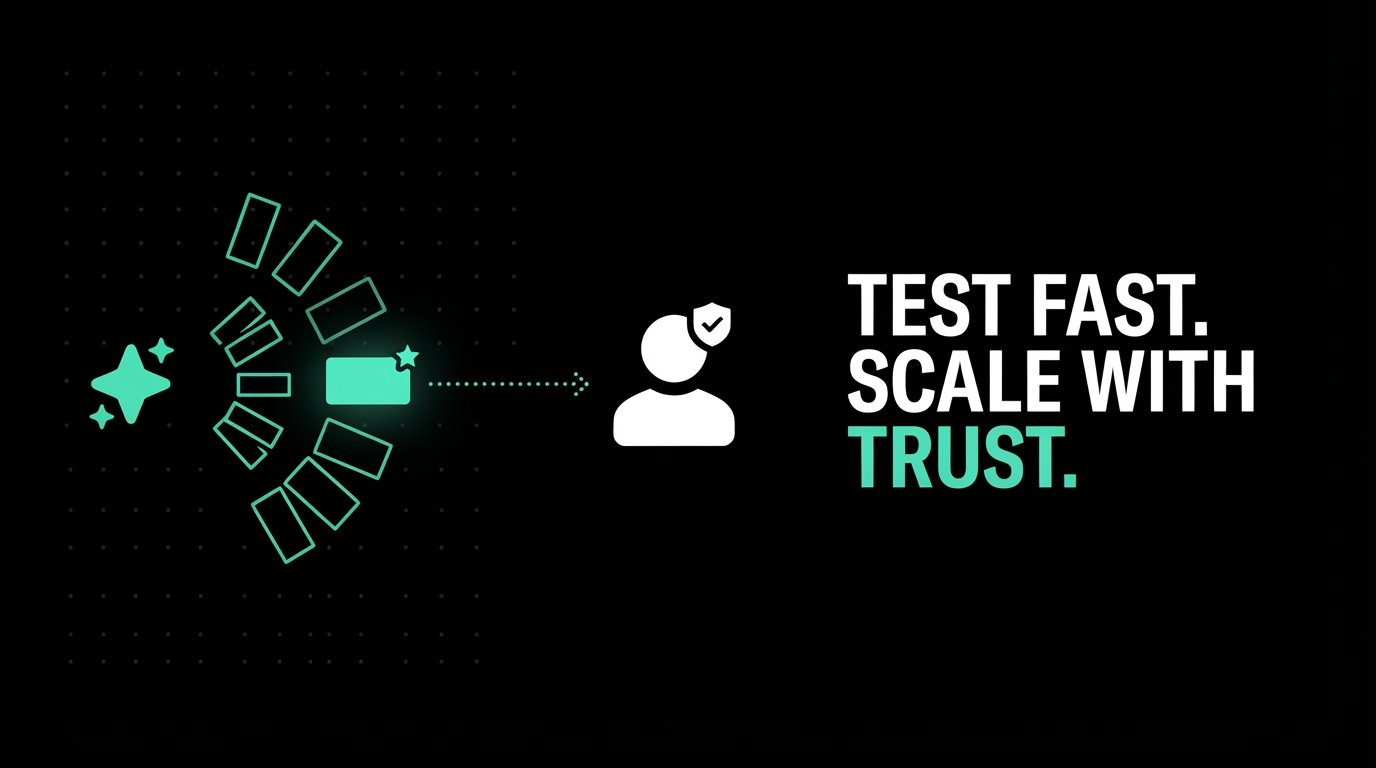
What Actually Works: Test Fast, Scale With Trust
The pattern showing up consistently across current data is a hybrid workflow, not an all-or-nothing choice: use AI-generated creative to test ten or more hook variations quickly and cheaply, identify which concept and angle actually converts, then reproduce the winning concept with a real creator before scaling serious budget behind it — especially for any UAE category where trust and consideration genuinely drive the purchase decision. A Meta Partner Agency running this workflow treats AI creative as a testing accelerant feeding a real-creator production pipeline, not a permanent substitute for one. The same test-fast-then-verify discipline applies to a GEO agency experimenting with AI-drafted content — speed is fine for the first draft, but the version that earns lasting citation and trust usually still needs a real editorial pass.
FAQs
Meta’s current automatic labeling system covers still images generated with AI tools, but does not yet reliably flag AI-generated video or audio — a real gap between the platform’s detection capability and what’s actually being produced. Regulatory disclosure requirements in specific markets may apply independently of what Meta’s own labeling system currently catches.
No — the strongest evidence is in DTC and e-commerce for lower-consideration, lower-price purchases, where testing volume matters more than deep trust-building. High-consideration categories — real estate, healthcare, financial services — show a much thinner performance case, and the existing data for those categories is limited and often comes from vendors with a stake in the answer.
Producing dozens of creative variations with real creators typically takes weeks of coordination, filming, and revisions. The same volume of AI-generated variants can be produced in a single day, which is the primary reason it has become a standard testing tool even among brands that still scale winning concepts with real creators.
UAE-specific rules addressing AI-generated ad disclosure specifically are still developing, so the safer approach is applying the same standard UAE consumer-protection principles around misleading representation that already govern any advertising claim, rather than assuming AI-generated content sits outside existing advertising law simply because the format is new.
Key Takeaways
- Meta’s advertiser count for generative AI ad tools quadrupled in six months — this is now standard infrastructure, not an experimental workaround.
- AI-generated creative wins clearly on testing speed and cost, especially for lower-consideration, lower-price DTC and e-commerce categories.
- A real trust gap exists: 81% authenticity for real creator content versus roughly 63% for AI-generated content. Executives also consistently overestimate audience comfort with AI ads.
- The strongest current workflow uses AI creative to test hooks quickly, then recreates winning concepts with real creators before scaling significant budget.
Meta Social — Dubai’s #1 Performance Marketing Agency
Meta Social builds AI-accelerated creative testing systems for Meta Ads UAE accounts — without betting an entire campaign on a format the trust data doesn’t fully support yet. Get in touch at metasocial.ae
Performance Marketing | SEO & GEO | AI Creatives & Video | Attribution Architecture
metasocial.ae | Dubai, UAE
About Meta Social
Meta Social is Dubai’s leading performance marketing agency and the GCC’s AI-native growth partner. We specialise in Performance Marketing, SEO & GEO, AI Creatives & Video, and Attribution Architecture — managing AED 50M+ in paid media across real estate, fintech, e-commerce, and hospitality.
metasocial.ae | Dubai, UAE